PAJERO
DNA

The DNA forged in the Dakar Rally—
the all-new PAJERO was born here
The Dakar Rally is renowned
as the toughest race on Earth.
The PAJERO tackled its harsh terrain not just
to win,
but to achieve something greater.

To instill unshakable confidence on any road.
To deliver the pure joy of driving.
And to push the boundaries of
automotive performance
beyond
what was previously thought possible.

Through numerous challenges
came remarkable victories and achievements.
More importantly, the technologies,
expertise and passion of the drivers
and engineers
developed along the way became
the very DNA of the PAJERO
that continues in the next-generation.

Built on an unmatched Dakar legacy,
the PAJERO is ready to write its next chapter.

Dakar Legacy
Forged in the Dakar Rally and proven across wild,
harsh terrain,
the experience earned there endures
in the next PAJERO.
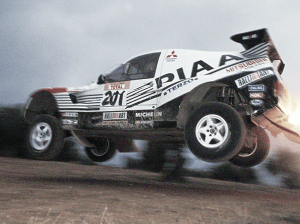
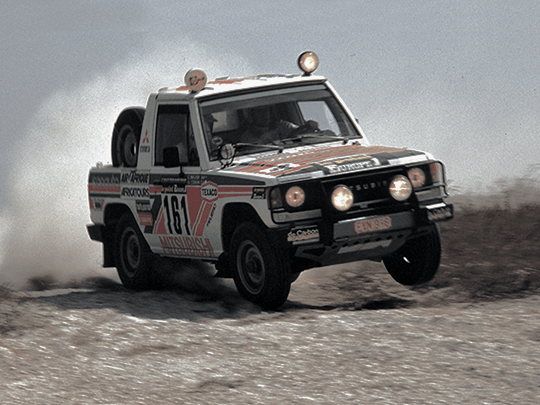
1983 Pajero Prototype
The PAJERO’s Dakar Rally debut—
victory in the Production Class
Achieved first place in the production class
on its debut entry with a completion rate
of only 32%.
Secured victory in the Marathon Class victory in the Marathon
Class
by completing the rally
without replacing major components.
Honored with the Best Team Award.
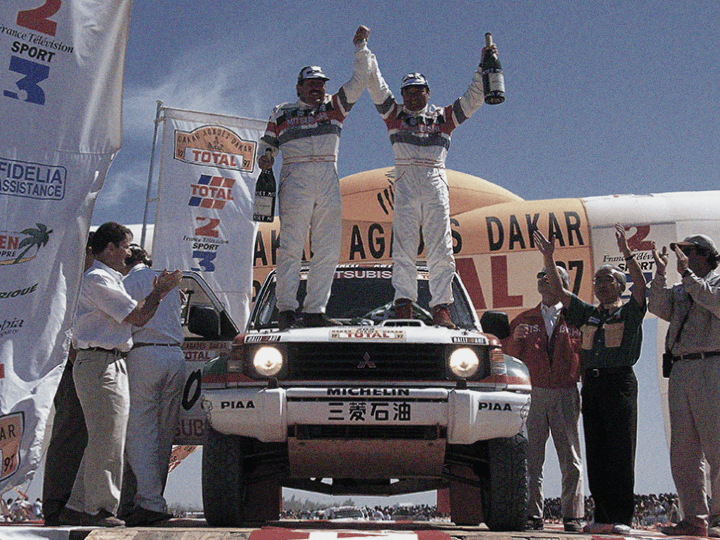
1985 Pajero
A Landmark Achievement
for a Japanese Manufacturer
MITSUBISHI PAJERO secures
Overall Victory at Dakar
Covered a total distance of
10,284 km
over 22 days.
Achieved a weight reduction of
over 200 kg compared to
the previous model.
Secured a decisive 1–2 overall finish.
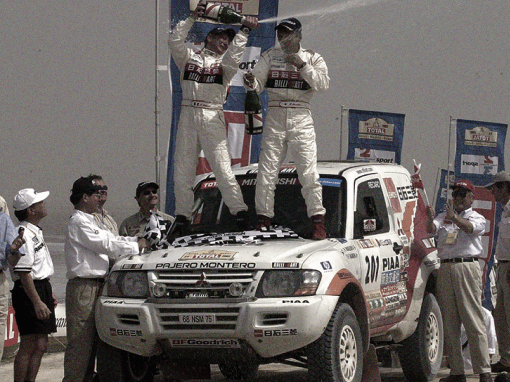
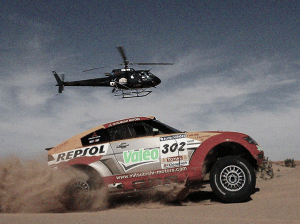
2007 Pajero Evolution
PAJERO EVOLUTION
achieves new milestones
Secured a seventh consecutive
Dakar Rally victory with a dominant
one-two finish during MITSUBISHI MOTORS’
25th year of competition.
Achieved a record-setting 12th overall Dakar win,
the most by any manufacturer
at that time.
All four entered vehicles
successfully completed the rally.
Dakar Legacy 1
The PAJERO’s Dakar Rally debut—
victory in the Production Class

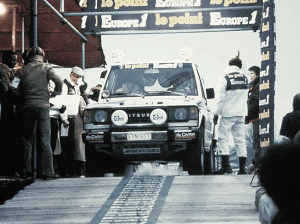
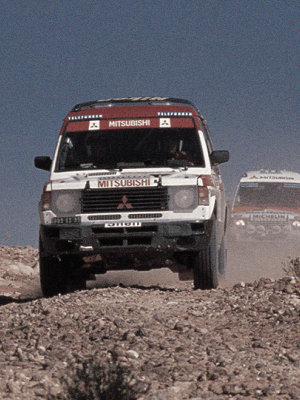
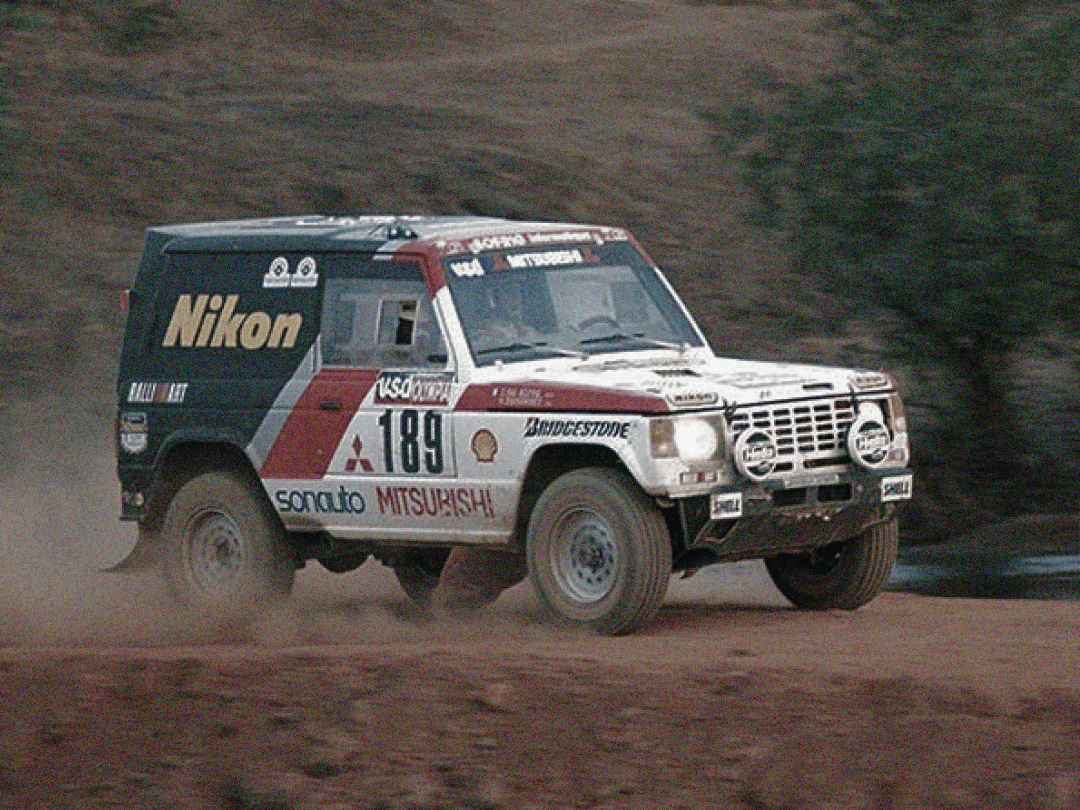
In 1982, MITSUBISHI MOTORS launched the PAJERO, a pioneering 4WD vehicle that excelled in both off-road and on-road performance. To showcase its capabilities, MITSUBISHI entered the PAJERO in the 5th Dakar Rally, marking its debut in the competition.

Four PAJEROs competed in the Production Class, where modifications to production vehicles were minimal. The vehicles were reinforced around key components, including the engine, at MITSUBISHI MOTORS’ Kyoto Plant in Japan, and further prepared in France by racing specialists SBM, who added additional body strengthening and safety equipment. This collaboration between Japanese and French engineers resulted in a formidable rally machine.

During the rally, PAJERO delivered an unexpected triumph, winning the Production Class on its first Dakar Rally appearance and finishing an impressive 11th overall. Another PAJERO secured second place in class and 14th overall, achieving a remarkable one-two finish on debut.
PAJERO’s success continued as it also won the Marathon Class, which honors vehicles that completed the rally without replacing major components. Additionally, the MITSUBISHI MOTORS team was awarded the prestigious Best Team Award.
This historic debut showcased PAJERO’s exceptional durability, reliability and performance, marking the beginning of a legendary Dakar Rally legacy.

1983 Pajero Prototype
Dakar Legacy 2
A Landmark Achievement
for a Japanese Manufacturer
MITSUBISHI PAJERO secures
Overall Victory at Dakar

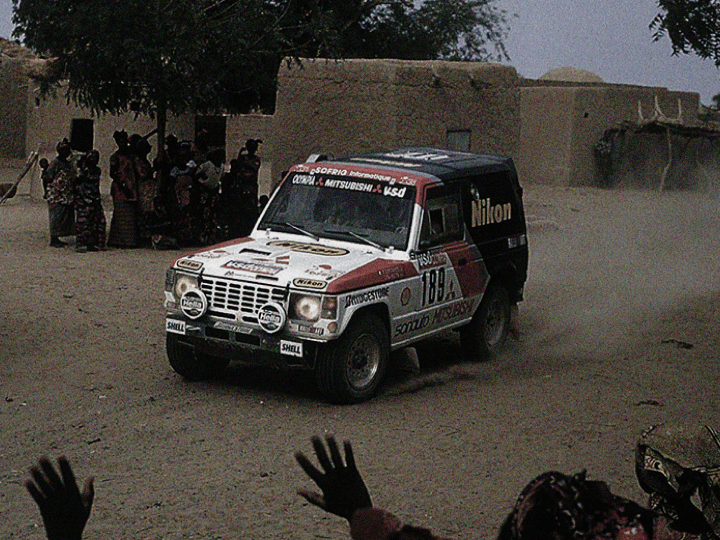
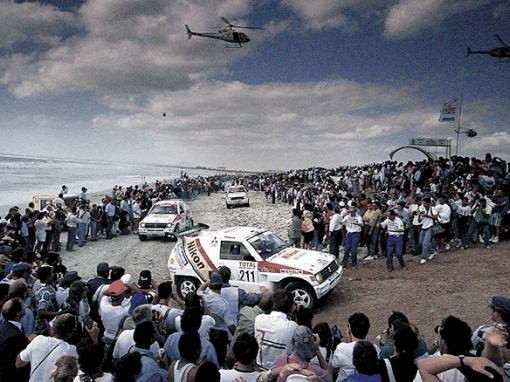
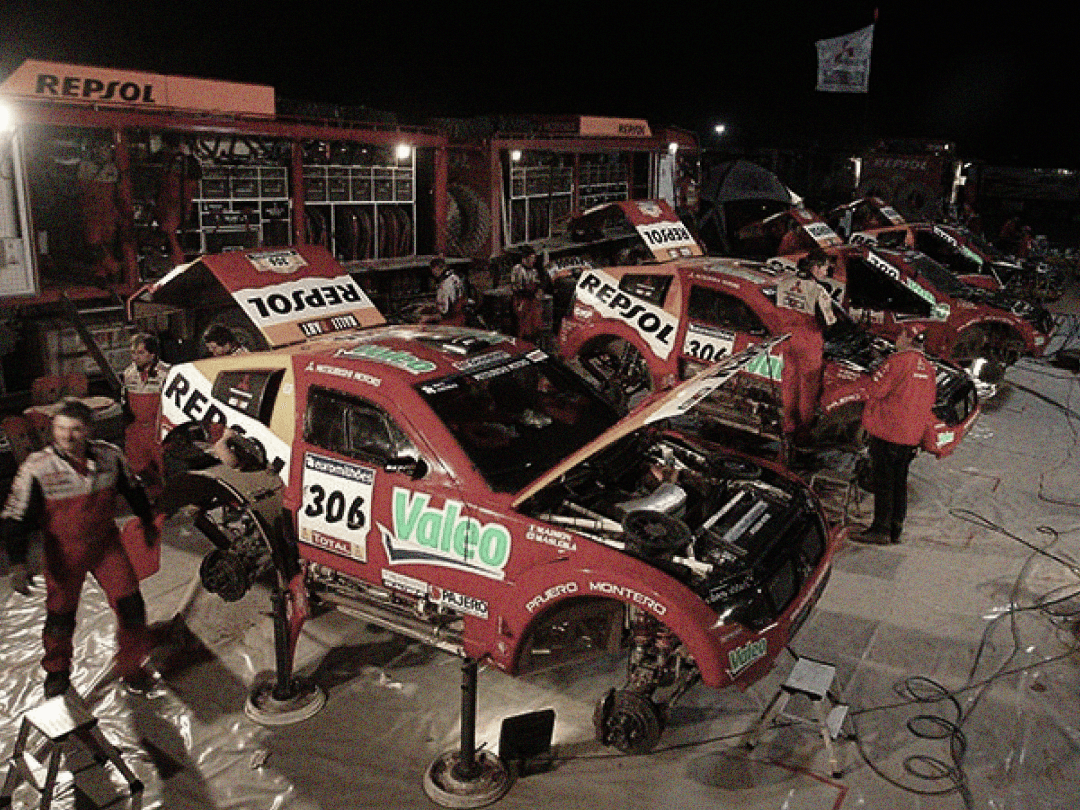
The 1985 Dakar Rally was a pivotal moment for PAJERO. Competing against 552 entrants, including 362 four-wheel vehicles, the PAJERO tackled a challenging 10,284 km course that traversed the Ténéré Desert twice.

MITSUBISHI fielded two prototype PAJEROs, which were over 200 kg lighter and capable of reaching speeds up to 185 km/h.

In the final stages of the rally, PAJERO took the lead and achieved a historic one-two finish, securing its first overall victory and marking the first time a Japanese manufacturer won the Dakar Rally overall.

1985 Pajero
Dakar Legacy 3
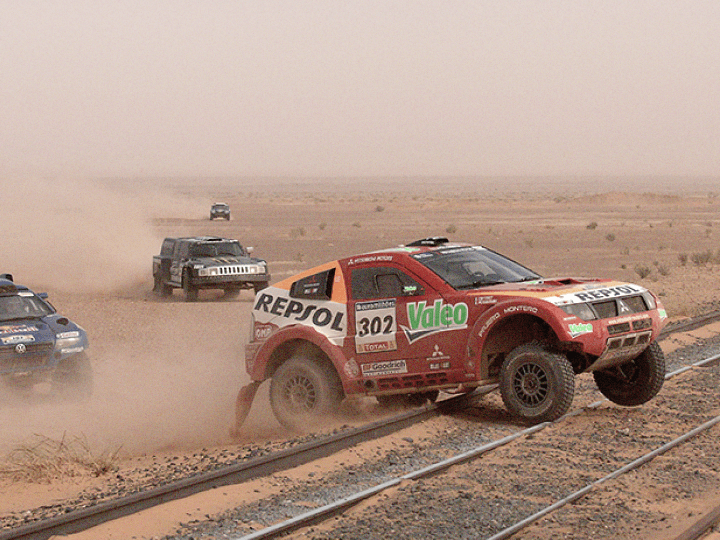
PAJERO EVOLUTION
achieves new milestones

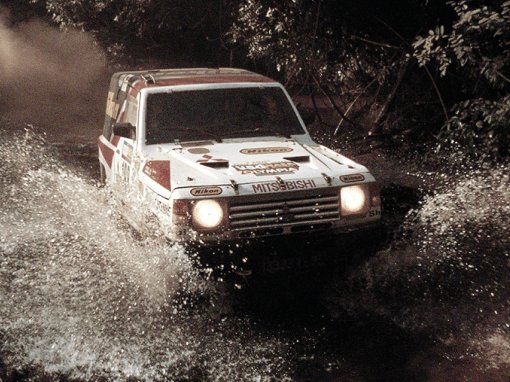
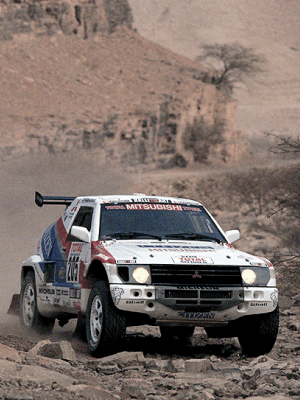
Since its debut in the Dakar Rally in 1983, MITSUBISHI MOTORS had consistently faced the world’s most challenging rally. The 2007 event was a significant milestone, marking its 25th year of participation. The ambitious goal was to achieve an unprecedented seventh consecutive victory and a record-breaking 12th overall win.

To celebrate this occasion, MITSUBISHI MOTORS unveiled the completely redesigned PAJERO EVOLUTION. While it retained some styling elements of the production fourth-generation PAJERO, the vehicle was built from scratch with extensive weight reduction, a lower center of gravity, and improved aerodynamics, making it faster and stronger for desert racing.

The rally quickly turned into a fierce competition between MITSUBISHI MOTORS and Volkswagen. The first half was tough, with mechanical issues and punctures causing MITSUBISHI to fall behind. However, as the race continued, Volkswagen’s leading entries faced setbacks, allowing Team Mitsubishi to gain momentum and take the lead.

MITSUBISHI MOTORS achieved a remarkable 1–2 finish, securing its seventh consecutive Dakar victory and a record 12th overall win. All four PAJERO EVOLUTIONS completed the rally, making the 2007 event a fitting celebration of 25 years in the Dakar Rally and a testament to MITSUBISHI MOTORS enduring strength.

2007 Pajero Evolution

Trail of
Evolution

Each challenge strengthened it.
Every rally machine exemplifies evolution forged
in extreme conditions.
Every achievement endures in future technologies.

Rally Team

Team Mitsubishi RALLIART
Team Director

Hiroshi Masuoka

Rally driver. He secured the overall title at the ‘Paris-Dakar Rally’ in 2002 and 2003, considered the world’s most challenging motorsport event. He also participated in the Pikes Peak Hill Climb in Colorado, USA, driving an electric racing car, where he finished second in the EV class in both 2012 and 2013. In June 2014, he achieved a remarkable second place in the EV conversion class (third overall), helping MITSUBISHI MOTORS secure a one-two finish. He is currently the Team Director of ‘Team Mitsubishi RALLIART’, which competes in the ‘Asia Cross-Country Rally’. Under his leadership, the team won the overall title in 2022 and 2025.
Engine Development Engineer

Itsuo Koda

Joined MITSUBISHI MOTORS in 1979 and played a pivotal role during the golden age of the WRC, starting with the 1981 Lancer Turbo. His contributions included the development of iconic cars like the STARION, GALANT VR-4, LANCER EVOLUTION I–VI, and the World Rally-Car, leading to the team’s Manufacturers’ Championship victory and four consecutive Drivers’ Championships. From 1984, he also contributed to the Paris-Dakar Rally, leading the team to seven consecutive victories from 2001 to 2007. Currently, he is actively involved in the AXCR, sharing his technical expertise with the younger generation and mentoring young engineers through the restoration of historic rally cars, thereby preserving the passion and know-how from that era.

Rally PAJERO Development Leader

Yoshihiko Ototake

Joined MITSUBISHI MOTORS in 1990, initially working on the bodywork for the company’s Paris-Dakar Rally entry in the Research Department, and later supporting motorsport activities. In 2009, he transitioned to pioneering research in electric powertrains, advancing technologies like electric superchargers and V2X, and leading the development of competition vehicles for Pikes Peak and the AXCR (OUTLANDER). After managing powertrain development, he moved to advanced vehicle development in 2020, focusing on bodyweight reduction and test vehicle construction. Currently, through MITSUBISHI’s participation in the AXCR with the TRITON, he is transferring his development expertise and advanced technologies to the younger generation. He also plays a crucial role in imparting engineering principles and a passion for cars to young engineers through his work in advanced development.

1980s

A Challenge into the Unknown

  • 1983

    MITSUBISHI PAJERO’s
    Dakar debut:
    triumphs
    in the Production Class
    on its initial attempt

  • #01

    Above all, I felt we hadfinally demonstratedour beliefs.

    Above all, I felt we hadfinally demonstratedour beliefs.

    Team Mitsubishi RALLIART
    Team Director

    Hiroshi Masuoka

  • 1985

    MITSUBISHI PAJERO achieves
    historic Overall Victory
    at the Dakar Rally,
    marking a first for
    a Japanese automaker

  • Challenges identified
    in competition
    and
    real-world performance
    data
    were quickly
    incorporated
    into
    production vehicles.

  • #02

    Unless we reachthe lakeshore at Lac Rose,we will not havereached our true goal

    Unless we reachthe lakeshore at Lac Rose,we will not havereached our true goal

    Engine Development Engineer

    Itsuo Koda

  • 1986

    Prototype PAJERO: All vehicles
    successfully complete the rally

  • 1987

    MITSUBISHI MOTORS
    vs. Peugeot:
    an intense struggle for
    Dakar dominance

  • #03

    A racing victory is significantonly if it contributesto developing superior vehiclesfor our customers.

    A racing victory issignificant only if itcontributes todeveloping superiorvehicles for ourcustomers.

    Rally PAJERO
    Development Leader

    Yoshihiko Ototake

1990s

Breakthrough innovation:
fueled by an unrelenting
pursuit of excellence

  • 1992

    MITSUBISHI MOTORS achieves
    a 1–2–3 finish,
    securing Its second Dakar
    Victory since 1985

  • #04

    The trust in the PAJEROas a capable 4WD evolvedinto confidencein a truly capable 4WD.

    The trust in the PAJEROas a capable 4WDevolved into confidencein a truly capable 4WD.

    Team Mitsubishi RALLIART
    Team Director

    Hiroshi Masuoka

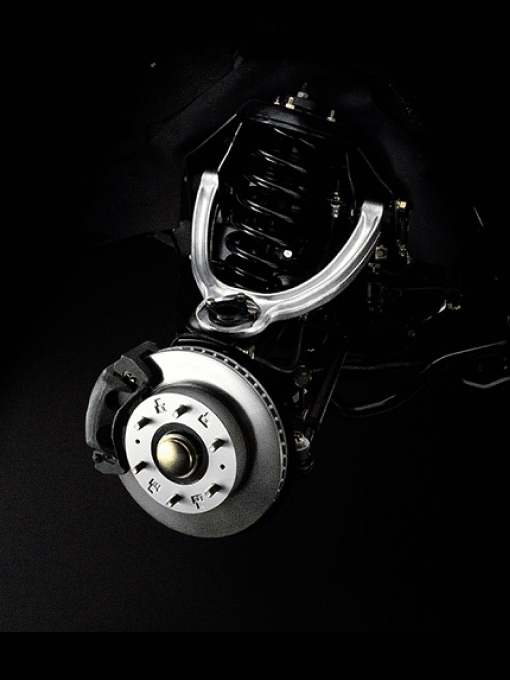
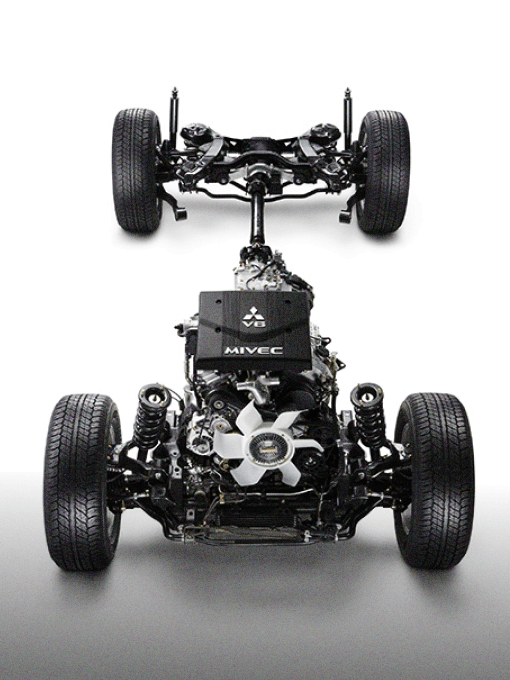
  • PAJERO EVOLUTION
    implements
    four-wheel
    independent suspension

  • 1993

    MITSUBISHI MOTORS’ consecutive
    Dakar victories and third overall win

  • #05

    You can’t win races unlessyou’re always challenging yourselfwith something new.

    You can’t win races unlessyou’re alwayschallenging yourselfwith something new.

    Rally PAJERO
    Development Leader

    Yoshihiko Ototake

  • 1995

    MITSUBISHI PAJERO: exceptional
    stability and continuous evolution
    as the ultimate off-roader

  • 1997

    MITSUBISHI MOTORS secures
    historic top-four finish
    Kenjiro Shinozuka achieves
    first Japanese Dakar Rally victory

  • #06

    Rallying was the very essenceof my life as an engineer.

    Rallying wasthe very essence ofmy life as an engineer.

    Engine Development Engineer

    Itsuo Koda

2000s

The beginning of a golden age
and unmatched strength

  • 2001

    The first woman to achieve
    Overall Victory in the Dakar Rally

  • 2002

    Hiroshi Masuoka achieves
    redemption
    with Overall Victory

  • #07

    Our belief has always beenthat strength should beordinarily achievable.We have consistentlyrefined this philosophyacross generations.

    Our belief has alwaysbeen that strengthshould be ordinarilyachievable.We have consistentlyrefined this philosophyacross generations.

    Team Mitsubishi RALLIART
    Team Director

    Hiroshi Masuoka

  • #08

    A car that doesn’t fatiguethe driver can be driven atfull throttle for extendedperiods on rough roads.

    A car that doesn’t fatiguethe driver can be driven atfull throttle for extendedperiods on rough roads.

    Rally PAJERO
    Development Leader

    Yoshihiko Ototake

  • 2006

    MITSUBISHI MOTORS
    vs. Volkswagen:
    the battle for Dakar

  • 2007

    MITSUBISHI Team secures
    seven straight Dakar Rally wins

  • Refined to the highest
    form of excellence,
    striking
    the ideal balance between
    on-road
    comfort
    and off-road capability.

  • #09

    At Dakar, victory is built onthe fundamental capabilitiesof the production vehicle.

    At Dakar, victory is builton the fundamentalcapabilities of theproduction vehicle.

    Engine Development Engineer

    Itsuo Koda

New
Departure

1983

Born from generations of passion and innovation,

crafted in the toughest conditions
and enhanced for greater comfort,

the next chapter of PAJERO begins.
Back to top